
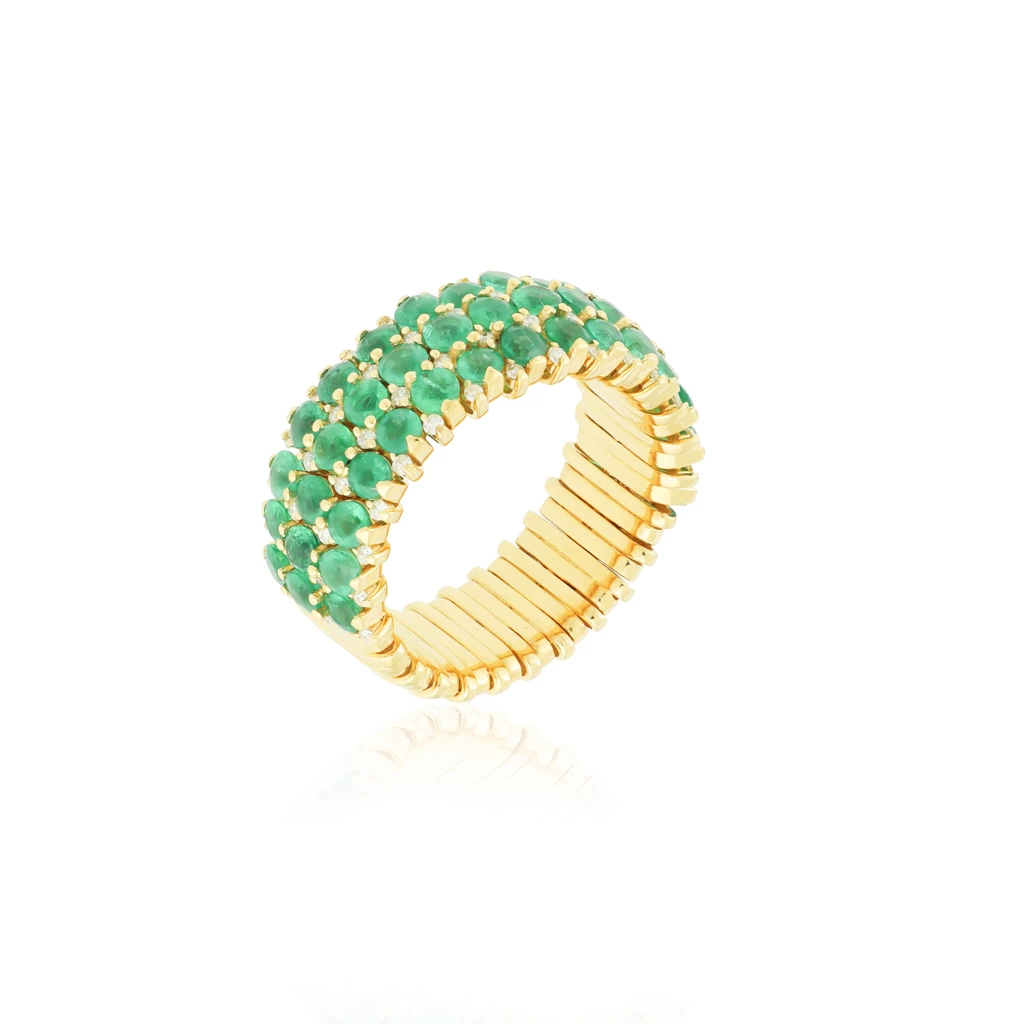
“Why is this quote different from the other supplier’s quote?”
It is the most common question wholesale buyers ask. Two manufacturers can offer the same design at very different prices, and the difference is not always about quality. Often it comes down to how the price is calculated.
Gold jewellery pricing is not a single number. It is a combination of several components, and each one can be handled differently by different suppliers. When you understand them, you can compare quotations fairly, protect your margins and spot hidden costs.
This guide explains how wholesale gold jewellery pricing works, step by step.
The Basic Formula
At its simplest, the price of a gold jewellery piece looks like this:
THE PRICING FRAMEWORK
What makes up a wholesale quote- Gold value
Net gold weight × agreed rate - Making charges
Design, setting and finishing - Wastage
Only when agreed and applicable - Stone value
Type, size and quality - Other charges
Services and delivery terms - Taxes and duties
As applicable to the order
Let us look at each part.
1. Gold Value
This is the cost of the gold in the piece. It depends on two things:
- Weight of gold: the net gold weight, in grams
- Gold rate: the market price of gold, based on purity
Understanding purity
| Purity | Gold content | Typical use |
|---|---|---|
| 24K | 99.9% | Coins, bars, investment |
| 22K | 91.6% | Traditional and bridal jewellery |
| 18K | 75% | Diamond and fashion jewellery |
| 14K | 58.5% | Lightweight and export markets |
Higher purity means more gold content and a higher gold value. This is why a 22K piece and an 18K piece of the same weight have different prices.
Gold rate changes daily
Gold rates move with international markets and currency changes, so quotations are usually valid for a limited time. Always ask:
- Which gold rate is used (the supplier’s daily rate or another reference rate)?
- Is the rate locked at order confirmation, at advance payment or at delivery?
- For how long is the quote valid?
2. Making Charges (Labour)
Making charges cover the work of turning gold into finished jewellery, including design, casting, filing, setting, polishing and finishing. They are usually expressed in one of two ways:
- Per gram: a fixed amount per gram of gold weight
- Percentage: a percentage of the gold value
What affects making charges?
| Factor | Effect on making charges |
|---|---|
| Design complexity | Intricate, handcrafted work costs more than simple machine-made pieces |
| Handmade vs. machine-made | Hand-finished pieces need more skilled labour |
| Piece size and weight | Lighter, delicate pieces can have a higher charge per gram |
| Order quantity | Larger quantities may improve per-piece rates |
| Technique | Filigree, Jadau, enamel and detailed stone setting add work |
| Customization | Custom designs need CAD, sampling and tooling |
A heavy, plain bangle and a lightweight, intricate earring can have very different making charges per gram, even in the same purity.
3. Wastage (Also Called Loss or Touch Adjustment)
During manufacturing, some gold is lost as dust, filings and polishing residue. Most of this can be recovered from the workshop, but some loss is unavoidable. Many manufacturers account for it as wastage in the price.
Wastage can be handled in different ways:
- Included in making charges: you see one combined rate
- Charged separately as a percentage of gold weight: for example, a certain percentage added to the weight
- Fine gold (touch) method: some wholesale trade is done on fine-gold weight, where the supplier and buyer settle the pure gold content and add an agreed wastage
Practices vary by region and by supplier, so this is the most important point to clarify in writing:
- Is wastage included or separate?
- How is it calculated?
- Does it change for different designs?
A quote with a low making charge but separate wastage can end up costing more than a quote with a higher making charge and wastage included. Always compare the final total, not individual line items.
4. Stone Value (for Diamond and Gemstone Jewellery)
If the piece contains diamonds or gemstones, their cost is added separately. It depends on:
- Type of stone: diamond, emerald, ruby, sapphire, pearl and so on
- Quality: for diamonds, the 4 Cs (cut, colour, clarity and carat); for gemstones, colour, clarity, cut and size
- Natural, treated or lab-grown: natural untreated stones usually carry a premium
- Quantity and size: many small stones versus a single large stone
- Certification: certified stones may cost more but offer proof of quality
For jewellery with many small diamonds, setting charges may also apply. These cover the work of securing each stone, and they depend on the number of stones, their size and the setting style.
5. Other Charges
Depending on the order, the quotation may also include:
- Hallmarking charges: for BIS hallmarking where applicable
- Certification or lab testing: for stones or finished pieces
- Packaging: boxes, pouches and branded packaging
- Customization or tooling: moulds, CAD work and sample development
- Shipping and insurance: especially for export or interstate orders
6. Taxes and Duties
Taxes are added at the end and depend on where the goods are sold or shipped.
- GST applies to jewellery sales in India. Rates for gold jewellery and for making charges can differ, and they may change, so confirm the current rates with your accountant or the official GST portal.
- Export orders are generally handled under different tax rules, but import duties and local taxes in the destination country will apply to the buyer.
Always ask for a quote that states clearly whether taxes are included or extra.
A Worked Example
The numbers below are examples for understanding the method, not actual rates. Use your current gold rate and supplier terms.
Piece: 22K gold necklace
Net gold weight: 20 grams
Assumed 22K gold rate: ₹10,000 per gram (example only)
Making charge: 8% of gold value (example only)
GST: 3% (example only, verify current rate)
| Step | Calculation | Amount |
|---|---|---|
| Gold value | 20 g × ₹10,000 | ₹2,00,000 |
| Making charges | 8% of ₹2,00,000 | ₹16,000 |
| Subtotal | ₹2,00,000 + ₹16,000 | ₹2,16,000 |
| GST | 3% of ₹2,16,000 | ₹6,480 |
| Total | ₹2,22,480 |
If wastage is charged separately, it would be added before taxes. If stones are included, their value and setting charges are added too.
Wholesale vs. Retail Pricing: What Is Different?
| Factor | Wholesale | Retail |
|---|---|---|
| Making charges | Usually lower per piece, especially for bulk | Higher, includes the retailer’s margin |
| Order size | Bulk or minimum order quantity | Single piece |
| Pricing basis | Often gold rate plus labour per gram | Often a final price tag |
| Negotiation | More room for volume-based terms | Limited |
| Payment terms | Advance, part-payment or agreed terms | Full payment at purchase |
Wholesale buyers also need to add their own costs and margin before setting a retail price.
How to Compare Two Wholesale Quotation
Quotes are only comparable if they are built the same way. Check these points:
| Check | Why it matters |
|---|---|
| Same gold purity (22K vs. 18K) | A lower purity naturally costs less |
| Same net weight | Heavier pieces cost more |
| Same gold rate used | Different reference rates change the total |
| Wastage included or separate | Can change the final price significantly |
| Same stone quality and type | Natural vs. lab-grown changes the cost |
| Same finishing and craftsmanship | Handmade vs. machine-made differs |
| Taxes included or extra | Avoids surprises at invoice time |
| Hallmarking and packaging included | Extra charges may appear later |
| Validity of the quote | Gold rates change |
The cheapest quote is not always the best. A very low price may hide lower purity, lighter weight, poor finishing or extra charges added later.
Red Flags in a Pricing Quote
- No breakdown. A single lump-sum price with no explanation.
- Price far below the market. This often signals lower purity or hidden costs.
- Vague wastage terms. “Wastage extra” without a percentage.
- No hallmark or purity guarantee.
- Pressure to decide immediately without a clear quote validity period.
- Different weight on the invoice than in the agreed sample or specification.
Tips to Protect Your Margins
- Ask for a written breakdown of gold value, making charges, wastage, stone cost and taxes.
- Lock the gold rate when you confirm your order, or agree a clear rate-fixing method.
- Negotiate on volume. Larger or repeat orders often qualify for better making charges.
- Standardise designs where possible. Repeating designs lowers per-piece production cost.
- Compare total landed cost, including shipping, insurance, duty and packaging.
- Check the weight tolerance. Agree on an acceptable variation between the sample weight and the delivered weight.
- Verify purity and hallmarking on delivery.
- Build a long-term relationship. Reliable repeat buyers often get better terms and priority.
Questions to Ask Your Manufacturer About Pricing
- How is your gold rate decided, and when is it locked?
- Are making charges per gram or a percentage?
- Is wastage included, or charged separately?
- What are the charges for stone setting, hallmarking and packaging?
- Do prices change for larger quantities?
- How long is this quotation valid?
- Are taxes included in the quote?
- How do you handle weight differences between the sample and the final order?
About Bhavya Gems & Jewels
Bhavya Gems & Jewels is a B2B jewellery manufacturer and wholesaler based in Jaipur with over 30 years of experience in gold and diamond jewellery. We work with retailers and designers who value clear pricing, consistent quality and reliable delivery. Our in-house processes include design, CAD, casting, stone selection and lab testing.
If you would like a detailed quotation for your requirements, send us an enquiry. You can also explore our products, fine gold jewellery and manufacturing process.
Factory: G-42 (A) E.P.I.P. Jewellery Zone, Sitapura, Jaipur 302022
Email: bhavya@bhavyagemsandjewels.com | Phone: +91 96360 37445
FAQs
Q1. How is gold jewellery priced in wholesale?
Generally by adding the gold value (weight × gold rate for the given purity), making charges, wastage if charged separately, stone value, other charges and taxes.
Q2. What are making charges in gold jewellery?
Making charges cover the labour and processes involved in turning gold into finished jewellery. They can be charged per gram or as a percentage of the gold value.
Q3. What is wastage in gold jewellery?
Wastage is the gold lost during manufacturing, such as filings and polishing dust. Some manufacturers include it in making charges, while others add it separately.
Q4. Why do two suppliers quote different prices for the same design?
Differences can come from purity, weight, gold rate used, wastage treatment, finishing quality, stone grade and taxes, so compare the full breakdown, not just the headline price.
Q5. Can I lock the gold rate for a wholesale order?
Many suppliers offer rate-locking at order confirmation or advance payment. Confirm the method and validity period before you commit.
Q6. Are making charges lower for bulk orders?
Often, yes. Larger and repeat orders can qualify for better per-piece rates, but terms vary by manufacturer and design.
Q7. Does hallmarking change the price?
Hallmarking adds a small charge, but it provides assurance of purity, which is valuable for both buyers and end customers.